If you’ve ever stood in a wind tunnel watching a race car’s wheels spin at 200 mph, or held a surgical robot’s arm as it maneuvers with sub-millimeter precision, you’ve interacted with a component you might never have noticed: precision angular contact ball bearings. For the last 12 years, I’ve worked as a bearings engineer at a precision bearing supplier—one of the few teams that’s never sold commodity, one-size-fits-all bearings—and I’ve lost count of how many times customers have asked, “What makes these different from the cheap ones I buy at the hardware store?” The short answer is not just the materials, or the size tolerance, but how they work: a carefully calibrated balance of angle, load distribution, and friction that turns mechanical motion into reliable, repeatable performance. Precision Angular Contact Ball Bearings
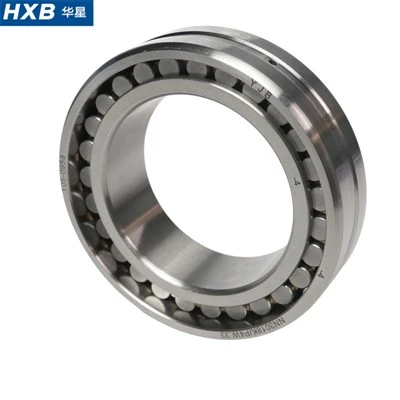
Let’s start with the basics, but skip the textbook jargon that makes bearing design feel like rocket science. A standard deep-groove ball bearing is pretty simple: two rings (inner and outer), a set of balls, and a cage to keep the balls from banging into each other. They handle radial loads—the pressure that pushes perpendicular to a shaft, like the weight of a fan blade on its motor. But if you have a load that pulls or pushes along the shaft (called an axial load), or a mix of radial and axial loads, a standard bearing will fail fast. It’ll develop play, wobble, or wear out so quickly you might as well use a cardboard sleeve. That’s where angular contact ball bearings come in.
What defines an angular contact bearing is that the raceways (the curved grooves in the inner and outer rings where the balls sit) aren’t straight across—they’re angled, or tilted, relative to the bearing’s centerline. The angle between the center of the raceway and the bearing’s axis is called the contact angle, and it’s the single most important number in how these bearings work. For example, a bearing with a 15-degree contact angle is built to handle mostly radial loads, with just a small amount of axial load. A 40-degree contact angle? That’s for heavy axial loads, like the thrust from a drill bit cutting through steel. When you need both, say a CNC router spindle spinning at 10,000 rpm while pushing down to carve aluminum, you pair two bearings back-to-back (or face-to-face, or in tandem) to balance the angles and handle every direction of force.
But the contact angle is only useful if every part of the bearing is made to precision. At our shop, when we manufacture these bearings, we work to tolerances that are a fraction of the width of a human hair. Most commodity bearings have a tolerance of 0.001 inches; our precision bearings are 0.00005 inches. That might sound like splitting hairs, but it’s the difference between a bearing that stays true and one that’s out of alignment before it even starts. Each ball is ground to within 0.00002 inches of perfect roundness, because even a tiny bump on a ball will create a hot spot under load, leading to wear and vibration. The cage that holds the balls? We use tempered steel or high-performance polymer, depending on the application, because a cage that flexes at high speed will let balls collide, creating noise and shortening life.
Here’s how it all comes together when the bearing is in use. When you install a precision angular contact bearing, you preload it. Preload is a tiny, intentional pressure applied to the bearing so there’s no play between the balls and the raceways. I know, that sounds counterintuitive—why would you add extra load to a part that’s supposed to reduce friction? But play is the enemy of precision. If there’s even a thousandth of an inch of play, a CNC router will cut a part that’s off by that amount, a surgical robot will miss its target by a few millimeters, and a wind turbine gearbox will vibrate enough to crack a gear tooth. Preload compresses the balls slightly, so they’re always in full contact with both inner and outer raceways, distributing load evenly across every ball instead of just a few. The catch is preload can’t be too much—too much pressure will create excess friction and heat, which can warp the rings or break down the lubricant. That’s why our engineering team works with customers to calculate the exact preload for their application, using variables like speed, temperature, and load.
Lubrication is another make-or-break detail that most people overlook. Precision angular contact bearings spin at speeds that can reach 100,000 rpm in applications like machine tool spindles, so the lubricant can’t just be a drop of oil. We recommend different lubricants for different uses: for high-speed machine tools, we use high-temperature synthetic grease with very low viscosity, because it won’t shear apart or generate excess drag at high rpm. For aerospace applications, we use dry lubricants like molybdenum disulfide, because liquid oil would leak at high altitudes and extreme temperatures. Even the way the lubricant is applied matters—for bearings that need ultra-precise motion, like the ones in coordinate measuring machines (CMMs), we often use a micro-dispensing system that applies just a few nanograms of grease, enough to separate the balls without adding extra mass.
I’ve seen how this works in real life, not just in a lab. Last year, a customer who makes orthopedic surgical robots contacted us because their existing bearings were failing after just six months of use. The robots use tiny angular contact bearings to move surgical instruments with a positioning accuracy of 0.001 inches, and the old bearings had play that made the instruments wobble during delicate procedures. When our engineering team took apart the old bearings, we found the contact angle was off by 2 degrees, and the balls had a tiny indentation from being ground to a non-standard size. We customized a pair of 25-degree contact angle angular contact bearings with 0.00003-inch ball tolerance and a light preload optimized for their robot’s speed, and after three months of testing, the bearings had zero play and no wear. The customer told us that since switching, they’ve had zero downtime on that line, and their surgeons have reported fewer errors during procedures. That’s the kind of impact precision bearings have—they’re not just mechanical parts, they’re critical to saving lives or building parts that go into everything from smartphones to satellites.
Now, you might be wondering: how do these bearings stand up to different environments? A lot of precision angular contact bearings are used in harsh conditions, like oil and gas drilling tools or agricultural equipment that’s exposed to dust and moisture. We manufacture bearings with sealed or shielded options that keep contaminants out, while still allowing the bearing to spin freely. The seals are made of a special rubber compound that’s resistant to chemicals and extreme temperatures, so they don’t crack in Arctic cold or desert heat. For high-temperature applications, like turbines that spin at 800 degrees Fahrenheit, we use bearings made of vacuum-melted stainless steel or even ceramic balls, which have a lower coefficient of friction than steel and can handle higher temperatures without warping.
One common mistake customers make is buying a precision angular contact bearing just by its part number, without considering how it will be used. A bearing that works great for a CNC mill might fail immediately in a packaging machine that spins at high speed and is exposed to dust. That’s why we don’t just sell bearings—we work with customers from the initial design phase to help them select the right contact angle, preload, lubrication, and material for their specific application. Last quarter, a customer who makes solar panel tracking systems came to us because their existing bearings couldn’t handle the side load from wind gusts. We recommended a pair of 30-degree contact angle angular contact bearings with a medium preload, mounted back-to-back, which distributed the wind load evenly and eliminated the wobble that had been damaging the tracking systems. The customer told us the new bearings have cut their maintenance costs by 70% this year.
So, to wrap this up, how do precision angular contact ball bearings work? They work because every part—from the contact angle of the raceways to the roundness of each ball to the amount of preload applied—is calibrated to exacting standards. They’re not off-the-shelf parts; they’re engineered solutions designed to eliminate play, distribute load evenly, reduce friction, and deliver consistent, precise motion even in the most demanding conditions. For more than a decade, we’ve built our business on this: not just selling bearings, but helping customers solve problems with motion that matters. If you’re working on a project that requires ultra-precise motion—whether it’s a surgical robot, a race car, a wind turbine, or a semiconductor manufacturing line—we can help you find the right precision angular contact ball bearings for your needs. We’d be happy to review your application, answer any questions you have, and work with you to find a solution that fits your performance and budget.
If you’d like to discuss your precision bearing requirements further, feel free to reach out to our team for a consultation. We’re here to help you get the reliable, accurate performance your project demands.
Motorcycle Bearings References
Harris, T. A., & Kotzalas, M. N. (2007). Rolling Bearing Analysis: Advanced Concepts of Bearing Technology. CRC Press.
Stachowiak, G. W., & Batchelor, A. W. (2014). Engineering Tribology. Elsevier.
O’Connor, J. J., & Boyle, B. (1996). Standard Handbook of Bearings. McGraw-Hill.
Hangzhou Huaxing Kechuang Holding Group Co., Ltd.
Hangzhou Huaxing Kechuang Holding Group Co., Ltd. is one of the leading manufacturers and suppliers of precision angular contact ball bearings in China, featured by quality products and good service. Please rest assured to buy bulk durable precision angular contact ball bearings from our factory. Welcome to view our website for more information.
Address: No.553 Yingbin Road, Linping, Hangzhou, 311100, China
E-mail: wmb@huaxingbearing.com
WebSite: https://www.hxbbearing.com/
