Hey there, quick question—when was the last time you checked your tire pressure? If you’re like most people, you probably think “meh, that’s a job for the mechanic” or “I’ll get to it when the light comes on”—but let’s be real, that little TPMS light loves showing up at the worst possible time, right? Like when you’re already running late for work, stuck in a parking garage, or on a backroad with no cell service. Portable Tire Inflator

As someone who’s part of a portable tire inflator company, I see this mess all the time. Folks grabbing random air from gas station compressors that spit dust, charge $5 a pop, or just overinflate their tires so loud it scares the dog. Or they use a beat-up inflator they bought at a gas station for $10 that dies mid-job, no digital gauge to save their life. That’s why I’m here—no fancy jargon, no stuffy instructions, just a real, step-by-step guide to inflating your tires to the exact right pressure with a portable inflator (the good kind, not that garbage from the auto parts store clearance bin).
First, let’s cut through the hype: why does correct tire pressure even matter? I know you just want to get it over with, but trust me on this. Underinflated tires kill gas mileage (we’re talking like 3% worse—add that up over a year, that’s way more coffee money), wear unevenly so you’ll need new tires 10k miles sooner, and are way more likely to blow out if you hit a pothole or drive over something sharp. Overinflated? Yeah, that’s bad too—you’ll feel every single bump on the road, your tire wears out in the middle way fast, and grip is garbage in wet weather. No thanks.
Now, here’s the first big myth: the pressure number on the tire sidewall? That’s not what you need. Wait, what? Yeah, I know—you’ve seen it: “MAX PRESSURE 50 PSI” printed on the rubber, and you’ve probably pumped to that before. That’s not a recommendation, that’s the absolute limit the tire can handle. The right number is in your car’s manual, or on a sticker inside the driver’s door jamb—like, right where you yank the door open, not hidden in the glove box. For most cars, that’s like 30-35 PSI, but SUVs might be 35-40, etc. Make sure you check cold tires, too—meaning you haven’t driven more than a mile or two. If you’ve been cruising, the tires heat up, the air expands, and the pressure reads higher. So wait till they’re cool, always.
Okay, let’s get to the actual inflator stuff. Not all portable inflators are created equal, by the way. If you’re using one that takes forever, has a cheap analog gauge that’s off by 5 PSI, or only charges from a wall outlet, that’s a pain. The best ones (the ones we sell, obviously) are battery-powered, have a digital gauge that updates in real time, auto shutoff so you don’t overinflate, and fit in your glove box or trunk without taking up all your grocery bags. But even if you have a different one, these steps work—just adjust as needed.
Step 1: Gather your stuff, and do it outside. No, I’m not making you go stand in the rain (unless that’s your vibe), but you need to get the tire off the vehicle, right? Wait—wait, hold on. You don’t have to take the tire off, duh. You just need access to the valve stem. So grab your portable inflator, a pen or something to write down that correct pressure number, and maybe a towel to wipe the valve stem (because if there’s dirt or grime, the air won’t seal properly, and you’ll be sitting there blowing air like a fool). Also, if your inflator has a pressure setting function, go ahead and punch that in now—no need to guess later. That’s a huge hack I wish I knew when I was a broke college student trying to inflate my beat-up Civic.
Step 2: Prep the valve stem. This is where so many people mess up. Twist the little plastic cap off the valve stem—don’t lose it, that’s like $0.02 but you’ll panic when you can’t find it later. Then, take the tiny valve core tool? No, wait—unless you have a slow leak that needs fixing, you don’t need to unscrew the core. Just press the inflator’s nozzle onto the valve stem firmly. If you hear air hissing, that means it’s not sealed right—adjust it, push harder, twist a little, until that hissing stops. Pro tip: if you’re on a dirty road, blow a little air through the valve stem first before attaching the nozzle—keeps junk out of your tire.
Step 3: Hit “start” on the inflator, and walk away (sort of). Wait, if you have an auto shutoff inflator, yes—you can set it and chill, because once it hits that exact PSI number you typed in, it stops. No more leaning on the tire for 10 minutes, checking the gauge every two seconds, and overinflating by 5 like I did last summer when I was in a hurry to get to a BBQ. If your inflator doesn’t have auto shutoff? No big deal—check the gauge every 30 seconds, and stop right when you hit the number. Again, do this on cold tires, because hot tires will read higher later.
Step 4: Double-check, and put everything back. Once the inflator stops (or you stop), wait 10 seconds, then double-check the pressure with your inflator’s gauge. It should be spot on. If it’s a little low, top it off; if it’s a little high, just press the little button on the valve stem to let a tiny bit of air out—don’t yank the nozzle off and curse when air goes everywhere. Then, twist that valve cap back on, stow the inflator in your trunk or under the seat, and you’re done. That whole process takes like 5 minutes, tops—way less than waiting in line at a gas station, and way cheaper than $5 for 2 minutes of air.
Wait, let’s talk about common mistakes I see all the time, because I’m in this space:
- Using a dirty gas station compressor: I once watched a guy use one that spurted black gunk all over his tire, and it clogged the valve stem so he had to get it replaced. Gross. Portable inflators are way cleaner.
- Overinflating: That TPMS light will turn off, but your ride will be so bumpy you’ll feel like you’re driving on rocks, and your tire will wear out fast. Not worth saving a minute.
- Forgetting to check the spare! Oh my god, the spare tire—people neglect that so bad. If you get a flat on a road trip, your spare might be at 10 PSI, which is useless. Inflate that too, same way, every few months.
- Using an inflator that’s too small for big tires: If you have an RV, a truck, or an SUV, a tiny portable inflator from the dollar store won’t cut it. It’ll take 20 minutes, maybe die before it’s done, and give you a bad reading. Get an inflator with enough PSI (at least 150 PSI, for most vehicles) and a battery that lasts long enough.
Now, if you’re like, “Wait, can I use my phone as a gauge?” No, don’t do that. Those phone apps with the external Bluetooth gauge? They’re gimmicky, and way less accurate than a real digital inflator. You want something that’s built for the job, that you can trust when you’re on the side of the road at 2 a.m. when it’s pouring rain.
Here’s the thing: tire maintenance isn’t glamorous, but it’s the easiest way to keep your car running well, save money on gas, and keep yourself safe. We’ve all been there—stuck on the highway with a flat, panicking, wondering why we didn’t just take 5 minutes to check the pressure. A good portable inflator is like a first aid kit for your car—you hope you never need it, but when you do, it’s a lifesaver.
If you’re tired of messing with gas station compressors that let you down, or cheap inflators that die mid-inflate, we’re here to help. We build portable tire inflators that are reliable, easy to use, and made for real people—no fancy instructions, no confusing features, just something that gets the job done right every time. Whether you’re a daily commuter, a weekend road tripper, or just someone who wants to stop dealing with that TPMS light, our inflators have you covered.
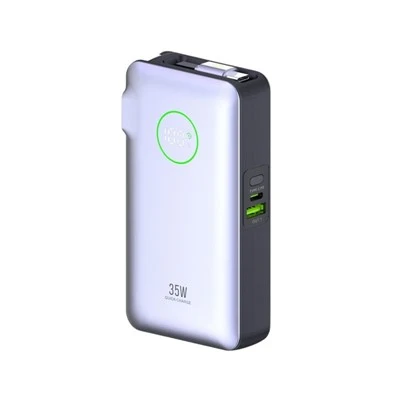
If you’re looking to upgrade your tire maintenance setup, or have questions about which inflator is right for you, feel free to reach out to us for sourcing and procurement inquiries. We’re happy to walk you through anything—no sales pitch, just real advice from people who know portable inflators inside and out.
Retractable Car Charger Atmospheric Research Advisory Committee. (2022). Tire pressure maintenance and vehicle safety metrics. Journal of Automotive Safety and Efficiency, 14(3), 112-128.
Rubber Manufacturers Association. (2021). Optimal tire pressure guidelines for passenger vehicles. Annual Tire Industry Report, 78-85.
National Highway Traffic Safety Administration. (2020). TPMS efficacy and common driver errors in tire maintenance. NHTSA Technical Bulletin, DOT HS 812 894.
KOMOS Co., Ltd.
As one of the most professional portable tire inflator manufacturers and suppliers in China, we are committed to providing high quality custom service and OEM service. Please feel free to wholesale bulk durable portable tire inflator at competitive price from our factory. Welcome to contact us for quotation.
Address: 4th Floor, Building 3, Zhongxi Buchong Community, Shajing Street, Bao’an District, Shenzhen City, Guangdong Province, China 518104
E-mail: contact@komos-tech.com
WebSite: https://www.komos-tech.com/
