If you’ve ever walked past a construction site, stared at a power cord, or held a plumbing fixture that works without leaking, you’ve interacted with copper turning components. I’ve been supplying custom copper turning parts for 12 years now, and one question comes up more than any other: “What’s the actual cost of copper turning?” It’s not a straight answer. It’s a mix of material, machine time, tolerances, and the fine details that separate a component that works for a week from one that lasts a decade. Let me break this down, from the raw copper bar you start with to the part that ships to your facility. Copper Turning
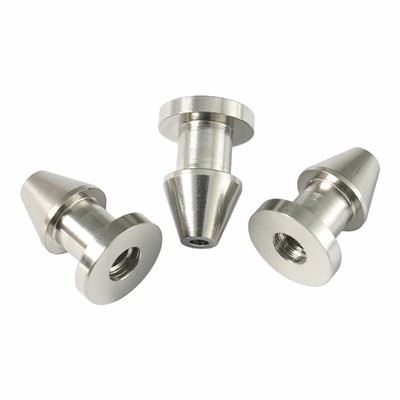
First, let’s get one thing straight: copper turning isn’t just “cutting copper on a lathe.” It’s a precision machining process where a lathe spins a copper workpiece at high speed while a cutting tool shaves away excess material to shape it into a cylinder, fitting, or connector. The cost doesn’t come from the copper itself—not entirely. In 2024, copper cathode (the raw material most turned parts start from) hovers around $3.80 per pound on the London Metal Exchange. But if you order standard brass or alloyed copper bars, that jumps to $4.20–$5.10 per pound, depending on the grade. Pure copper (C11000) is the most common for electrical connectors and plumbing fittings, but C36000 free-machining brass (a copper-zinc alloy) is cheaper to turn because it cuts with less tool wear. Wait, let’s test that: last quarter, a customer ordered 5,000 C11000 brass valves for a municipal water project. Their quote was 18% higher than an identical order for C36000. That’s not just the copper price—that’s the machining time.
Machining time is where most of the cost hides, and it’s driven by tolerance. If you need a copper bushing with a 0.500-inch outer diameter, a ±0.001-inch tolerance is way cheaper than ±0.0001-inch. The tighter the tolerance, the slower the lathe runs, the more passes you make, and the more inspection time you pay for. I learned this the hard way in 2018. A defense contractor reached out for custom copper turnings for missile guidance wiring connectors. They needed the pin holes to align within 0.0005 inches across 100 parts. Our standard lead time for a 5,000-part order was two weeks, and the initial quote was $1.20 per part. For this job, the lead time extended to four weeks, and the per-part cost jumped to $4.75. Why? We couldn’t run the lathe at full speed—too much vibration would throw off the tolerance. We had to do a second inspection on every part with a coordinate measuring machine (CMM), which costs $75 an hour, and that added 12 hours of labor for that order. For context, if that same customer had accepted ±0.002-inch tolerances, the per-part cost would have dropped to $1.30. That’s the tradeoff: precision costs time, and time costs money.
Then there are surface finishes. Most copper turning parts leave a rough “as-machined” finish, which costs almost nothing. But if you need a smooth surface for a plumbing seal that won’t leak, or an electrical contact that transfers current without resistance, you need polishing, buffing, or tin plating. Last year, a HVAC parts maker ordered 20,000 copper turnings for refrigerant line fittings. As-machined finish would have been $0.85 per part, but they needed a 16 Ra surface finish (that’s 16 microinches of roughness, super smooth) so no refrigerant leaks. We had to add a secondary polishing step, which upped the cost by $0.30 per part. And if you need plating, say tin for corrosion resistance, that’s another $0.15 per part on top of that. Not to mention material waste. Copper is soft, so when you turn it, the shavings (called chips) can curl and jam the lathe. To fix that, we use lubricating cutting fluids, which add $0.05 per part in fluid costs and disposal fees for the used fluid.
Machine complexity also plays a role. Not all lathes are equal. A manual lathe can turn simple parts like straight copper pins, but for complex geometries like a threaded copper valve body with a stepped shaft, you need a CNC lathe that can do multiple operations in one setup. CNC lathes cost 10 times more than manual ones, so their labor rate is higher—about $85 an hour vs. $45 an hour for manual. But here’s the catch: a CNC lathe cuts parts in 20 minutes that would take a manual lathe two hours. Last month, a customer asked for 10,000 copper electrical terminal posts. On a manual lathe, that would have been $2.50 per part, lead time 10 days. On a CNC lathe, it was $1.10 per part, lead time 3 days. The higher machine rate was outweighed by the way faster cycle time. But if the part is super simple, like a 1-inch copper rod cut to length, a manual lathe is cheaper. I always tell new customers: if your part is as simple as a pencil, go manual. If it has threads, chamfers, or multiple diameters, CNC is the way to go.
Quantity is the biggest factor of all. This is where I see customers get confused all the time. A one-off prototype copper turning will cost $50–$150 per part, because you have to set up the lathe, program the CNC, and run a test piece before making the actual part. A small order of 100 parts will drop that to $5–$15 per part. A large order of 10,000 parts will be $0.50–$2 per part. Let’s take an example: a small pump manufacturer came to us with a prototype copper impeller in 2023. They needed three parts for testing. Quote was $320 total, that’s ~$107 per part. When they ordered 10,000 for production six months later, the total cost was $1,850, that’s ~$0.185 per part. The setup cost is spread out over more units. Of course, there are exceptions. If a large order has tight tolerances or complex finishes, it’ll cost more per part than a large order of simple parts. But generally, the more you order, the lower the per-unit cost. That’s why I recommend customers order a small test batch first, then scale up once the prototype works. It’s cheaper than reworking a huge order that’s wrong.
Wait, let’s talk about hidden costs, the ones no one tells you about. Scrap rate. Copper is soft, so parts can get damaged during machining or handling. For a standard order, our scrap rate is 2–3%, so we build that into the quote. If a customer needs a 99% yield, that’s a 10–15% scrap rate, which adds 5–10% to the total cost. Last year, a medical device customer ordered 500 copper turnings for surgical instruments, required 99.5% yield. We had to scrap 12 parts that had tiny micro-cracks from turning, so we quoted for 525 parts, even though they only needed 500. That’s a hidden cost most people don’t plan for. Another hidden cost: lead time. If you need a rush order in two days instead of two weeks, we pay for overtime, and that adds 25–50% to the cost. A customer ordered 5,000 copper pins at 5pm on a Friday, needed them at 9am Monday, so we ran a double shift. The cost was 40% higher than our standard quote.
Now, let’s get to the real numbers, the ones that matter to you. I don’t do generic quotes. I’ve seen a lot of online calculators that say “copper turning is $X per pound” but that’s useless. Because your part might weigh 0.1 pound with a tight tolerance, or 2 pounds with a rough finish. A 1-pound simple copper pin is $0.70 per pound in a 10,000-part order, but a 0.1-pound complex valve body with tight tolerance is $12 per pound. Let’s break down three common parts to make it real. First: simple copper pin for electrical wiring, 10,000 parts, C11000, ±0.002-inch tolerance, as-machined finish. Total cost: $1,800, that’s $0.18 per part, $1.80 per pound. Second: copper bushing for plumbing, 5,000 parts, C36000, ±0.001-inch tolerance, 32 Ra surface finish, no plating. Total cost: $4,250, that’s $0.85 per part, $4.25 per pound. Third: custom copper connector for automotive wiring, 1,000 parts, C11000, ±0.0005-inch tolerance, tin plated, 16 Ra finish. Total cost: $1,900, that’s $1.90 per part, $7.60 per pound. See the difference? The first is volume, the second is finish, the third is precision and plating.
So how do you get an accurate cost for your copper turning parts? Stop guessing, stop going by copper price per pound, start with your requirements. Write down: what grade of copper do you need? What tolerance? What surface finish? How many parts? When do you need them? I’ve had customers come to me and say “I need copper turning parts, give me a quote” and I can’t give them a fair quote without those details. A few small adjustments can change the cost by hundreds or thousands of dollars. Last quarter, a utility company came to me, first quote I gave them was $2.10 per copper valve turning, they asked if they could drop the tolerance from ±0.001 to ±0.002, switch to C36000 instead of C11000, and order 20,000 instead of 5,000. The new per-part cost was $0.65, 70% lower. That’s the power of aligning your requirements to what’s actually needed for your application, not what you think you need.
Now, let’s talk about quality, because the cheapest copper turning part isn’t always the best. I’ve had customers tell me they got a quote for $0.10 per copper pin, half of what I quoted. When they got the parts, they were rough, had burrs that would fray wiring, and 10% scrap rate. Ended up costing them more in rework and replacements than if they’d ordered from me. Copper turning isn’t a commodity. The quality of the lathe, the skill of the operator, the inspection process, all matter. I’ve been in this long enough to know that cutting corners on copper turning parts leads to failure. A plumbing fitting that leaks can cause water damage, a wiring connector that fails can take down a machine. The cost of a bad part is way higher than the difference in price between a good supplier and a cheap one.
At the end of the day, the cost of copper turning is a balance between your needs, your budget, and the quality you expect. There’s no one-size-fits-all number, but there is a fair number that reflects the work that goes into turning copper into the part you need. If you’re looking for a transparent, experienced copper turning supplier, I can break down every cost for you, no hidden fees, no vague quotes. Tell me about your part, your quantity, and your timeline, and I’ll give you a quote that makes sense.
If you’re ready to get precise, reliable copper turning components that fit your project and your budget, reach out to discuss your custom requirements. I’m here to help you figure out what you need, and what it will actually cost, no surprises.
Stainless Steel Turned Parts References:
- ASM International. Copper Alloys: Processing and Applications. 2021.
- Machining Data Handbook. Precision Machining of Copper and Copper Alloys. 10th ed. Society of Manufacturing Engineers, 2022.
- London Metal Exchange. Copper Cathode Price Historical Data, 2024.
- Copper Development Association. Machining Guidelines for Copper Components. 2023.
Huizhou Quanyi Precision Hardware Products Co., Ltd.
We’re well-known as one of the leading copper turning manufacturers and suppliers in China, featured by quality products and good service. Please rest assured to buy customized copper turning made in China here from our factory. Contact us for more details.
Address: Building A10, 7th Floor, Zhongchuangyingke 5G Industrial Park, Zhonghan Industrial Park, Tonghu Town, Huizhou City
E-mail: info@qycncturning.com
WebSite: https://www.qycncturning.com/
