If you’ve ever stood inside a steel mill during a furnace melt, or inspected wiring near a power plant’s turbine, you’ve probably spotted cables that look a little tougher than the ones running to your home’s outlets. As a supplier of high-temperature cables, I get asked this question all the time: how are these cables really different from the “normal” ones most of us interact with daily? It’s not just about holding up to heat—though that’s the most obvious part. Let’s break down the science, the materials, and the real-world reasons these cables exist, straight from the team that sources, tests, and ships them every week. High-temperature Cables
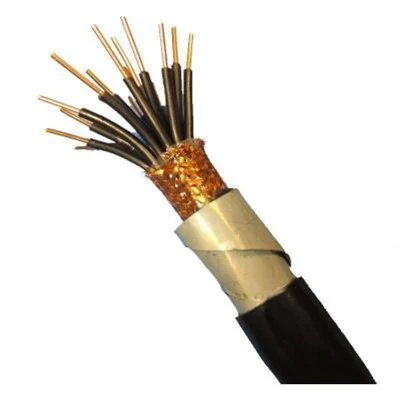
First, let’s define what we mean by “normal cables.” For the purpose of this conversation, those are the ones you’ll find in residential wiring, office buildings, standard commercial machinery, and even most consumer electronics. Their operating temperature range is typically somewhere between -40°C and 90°C, give or take a little. They’re designed for ease of installation, low cost, and reliability in environments where the biggest stressors are occasional moisture, dust, or minor mechanical wear. They’re not built for the extremes that industrial, aerospace, automotive, or renewable energy operations encounter.
High-temperature cables, by contrast, are engineered for continuous operation at temperatures far above that 90°C mark—usually starting at 125°C and going up to 2,000°C or more for specialty applications. But the difference doesn’t stop at temperature. It touches every layer of the cable: the conductor, the insulation, the jacket, and even how the whole assembly is constructed. Let’s start with the conductor, which is the part that carries electricity. Normal cables almost always use copper conductors, often annealed copper, because it’s cheap, highly conductive, and easy to bend. High-temperature cables? They use conductors that can maintain their strength and conductivity at extreme heat. For applications where temperatures top 200°C, that might be nickel-plated copper, because pure copper starts to soften and lose tensile strength above 150°C. For even higher temps—like the heat shield wiring on a rocket’s launch pad, or cables running through a furnace’s exhaust stack—we use nickel alloy conductors, or even refractory metals like molybdenum. These don’t just resist softening; they also resist oxidation, which is a big risk when you’re dealing with constant high heat. Oxidation causes conductors to degrade over time, increasing resistance and leading to power loss, or even failure. Normal copper would corrode quickly in those environments, so switching to a conductor that can stand up to that is non-negotiable.
Next up: the insulation. This is where the biggest science happens, and where you’ll see the most visible differences between a high-temperature cable and a normal one. Normal cables use insulation materials like PVC (polyvinyl chloride), cross-linked polyethylene (XLPE), or ethylene propylene rubber (EPR). These are all great for their intended use: PVC is cheap, easy to extrude, and resistant to moisture; XLPE is tougher and handles medium voltage well. But none of these hold up long at temperatures over 100°C. PVC starts to harden, crack, and release toxic fumes when heated above 60°C for extended periods. XLPE can handle up to 90°C continuous, but above that, its molecular structure breaks down, leading to insulation failure. High-temperature insulation, though, uses polymers engineered specifically for heat resistance, or even inorganic materials. For moderate high-temp applications—think industrial ovens or HVAC systems that run hot—we often use silicone rubber. Silicone can handle continuous temperatures up to 180°C, is flexible even at low temps, and resists ozone and moisture well. But for higher temps, silicone isn’t enough. For 200°C to 500°C, we turn to materials like polytetrafluoroethylene (PTFE), commonly known by the brand name Teflon, or fluorinated ethylene propylene (FEP). These fluoropolymers have extremely high melting points—PTFE melts around 327°C—and don’t break down, degrade, or release harmful compounds when exposed to high heat. Even better, they’re chemically inert, so they can stand up to oils, fuels, and industrial chemicals that would eat through normal insulation.
For applications where temperatures go even higher—like welding operations, kilns, or aerospace components where parts can reach 1,000°C or more—we use inorganic insulation materials. These aren’t polymers at all; they’re made from glass, ceramic, or mineral fibers. For example, mica tape insulation is used on cables that run through continuous 1,000°C environments, because mica is a mineral that doesn’t burn or degrade at any temperature below its melting point of around 1,200°C. We also have cables with magnesium oxide (MgO) insulation, which is a ceramic material. MgO-insulated cables (often called MI cables) are used in the harshest environments: they’re non-combustible, can handle temperatures up to 1,100°C, and are impervious to moisture and corrosion. The downside? They’re stiffer and more expensive than polymer-insulated cables, but for applications where failure isn’t an option, they’re the only choice. That’s a key point normal cables don’t have to address: failure in a normal environment is an inconvenience, but failure in a steel mill, a power plant, or an aerospace test can be catastrophic.
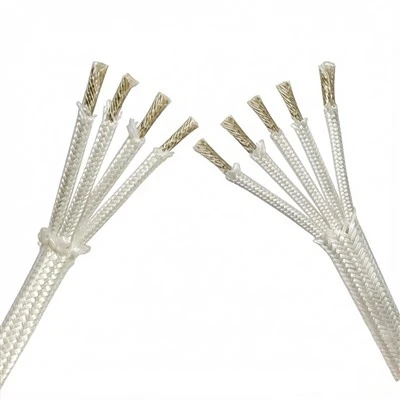
Then there’s the jacket, the outer layer that protects the insulation and conductor from mechanical damage, chemicals, and moisture. Normal jackets are usually PVC or polyurethane, designed to be durable for everyday use but not for extreme heat. High-temperature jackets, if needed, are either the same high-temperature polymers as the insulation, or even metal. For example, a cable running through a refinery’s processing area might have a FEP jacket to resist chemical spills, while a cable running near a welding torch might have a fiberglass braid over the insulation, treated with a heat-resistant coating to prevent burns. Some specialty high-temperature cables even have a stainless steel outer jacket, which not only resists high heat but also provides EMI (electromagnetic interference) shielding, critical for applications like radar systems or power grids where signal integrity matters.
Another big difference is the construction and testing of high-temperature cables. Normal cables are mass-produced for standard applications, so their testing is done to meet industry standards for general use. High-temperature cables, though, undergo far more rigorous testing. We test for continuous temperature resistance, obviously, but also for thermal cycling—exposing the cable to rapid swings in temperature (like a plant that shuts down and cools off every night) to make sure the insulation doesn’t crack or delaminate. We test for chemical resistance, since high-temperature environments often have oils, solvents, or corrosive gases that would eat through normal insulation. We also test for mechanical strength: high-temperature cables might be pulled, bent, or subjected to vibration, like the ones in a mining truck or an aircraft engine, so they have to be tough enough to handle that without breaking.
Let’s put this into real-world context to make it tangible. Suppose you’re a bakery with commercial ovens, or a food processing plant that runs high-temperature pasteurization lines. A normal cable would heat up, its insulation would crack, and within a year or two, you’d have exposed conductors, short circuits, and downtime. A high-temperature silicone-insulated cable, by contrast, can run right next to those ovens for 10 years or more without failing. Another example: a wind turbine’s gearbox runs at high temperatures, and the wiring inside has to withstand both the heat from the gearbox and the vibration from the turbine spinning. A normal cable would fray and fail in a matter of months, but a high-temperature nickel-conductor and FEP-insulated cable is engineered to handle that exact stress.
I hear customers sometimes ask if they can just use a normal cable with a heat shield around it to cut costs. It’s a reasonable question, but here’s the thing: heat shields add bulk, are only effective if they’re properly installed and maintained, and don’t protect the cable from the other stresses of high-temperature environments—like oxidation, chemical exposure, or thermal cycling. A normal cable’s insulation will break down from the inside out even if you wrap it in a heat shield, because the heat penetrates the shield over time. High-temperature cables are built from the core to the outer layer to resist those stresses, so they’re a far more reliable, and often more cost-effective, solution in the long run.
Another common misconception: all high-temperature cables are the same. They’re not. There’s a huge range, from cables that handle 125°C for automotive under-hood applications, all the way up to cables that handle 2,000°C for welding or furnace work. Choosing the right one isn’t just about the temperature; it’s about the other environmental factors present. If you need a cable for a chemical plant, you need one that’s not just heat-resistant, but also chemically inert. If you need a cable for aerospace, you need one that’s lightweight, heat-resistant, and impervious to radiation. If you need a cable for a mining operation, you need one that’s heat-resistant, tough, and resistant to abrasion. That’s the expertise we bring to the table as a supplier: we don’t just sell cables; we help customers match the right cable to their specific application, so they don’t end up paying for a cable that’s over-engineered, or worse, under-engineered and failing.
At the end of the day, the core difference between high-temperature cables and normal cables is purpose. Normal cables are built for the average, everyday conditions of our homes, offices, and standard machinery. High-temperature cables are built for the extremes that keep industry running: the heat of a furnace, the vibration of a wind turbine, the chemicals of a refinery, the demands of aerospace and automotive engineering. Every layer, every material, every test is tailored to that extreme.
If you’re working in an industry that operates in high-temperature environments, or if you’re dealing with a recurring cable failure that you suspect is due to inadequate heat resistance, don’t settle for one-size-fits-all solutions. Reach out to our team to discuss your specific needs. We can walk you through the different types of high-temperature cables, their specifications, and help you find the right solution for your operations. Together, we can ensure your wiring is reliable, safe, and built to last, even in the toughest conditions.
Flat Cables References
- "High Temperature Cable Materials and Applications," IEEE Transactions on Power Electronics, Vol. 32, No. 6, 2017.
- "Insulation Materials for Extreme Temperature Environments," Journal of Electrical Insulation, 2020.
- "Industrial Cable Selection: Performance Under Thermal Stress," National Fire Protection Association (NFPA) Report, 2019.
- Nickel Alloy Conductors for High Temperature Cables, International Electrotechnical Commission (IEC) Standard 60811-1-2, 2021.
Anhui Yuantong Cable Co., Ltd.
As one of the most professional high-temperature cables manufacturers and suppliers in China, we offer a wide range of cables with superior quality. Please feel free to wholesale bulk customized high-temperature cables from our factory. Also, pricelist is available.
Address: Yongfeng Industrial Park, Tianchang City, Anhui Province
E-mail: ahytcable@126.com
WebSite: https://www.yuantongcable.net/
