Hey everyone, thanks for swinging by my blog—especially all you RC heli and airplane fanatics out there. If you’ve ever found yourself mid-session, your buddies already airborne, staring at a freshly charged battery and thinking, “Can I just plug this into my bird right now?” you’re not alone. As someone who runs an RC battery supplier, I get this question at least a dozen times a day, and it’s one that’ll make or break your flight if you ignore the science behind it. Let’s break this down straight, no jargon, just real-world stuff for your RC toys. RC Heli & Airplane Battery
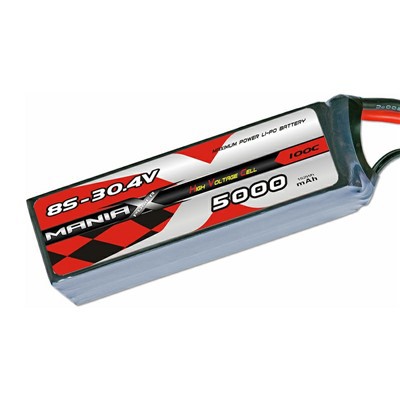
First, let’s get the basics outta the way: most of us RC folks use LiPo batteries, right? That’s lithium-polymer, the gold standard for heli and airplane packs because they’re high-energy, light, and pack way more punch than old NiMH or NiCd sets. If you’re still using those, this still applies to a degree, but LiPo’s are where most of the “wait before you fly” confusion comes from. Now, when you charge a LiPo, what’s actually happening inside? The battery’s cells are moving lithium ions from the cathode to the anode, storing up that electrical energy. When the charger clicks to full, it’s not like a water tank that’s instantly full and steady—there’s a tiny bit of “instability” still going on, and that’s where the immediate use question starts.
Let’s talk discharge curves and cell stability, the boring-sounding stuff that actually matters. When a LiPo hits full charge, it’s at around 4.2 volts per cell, right? But that’s a peak voltage. If you hook the battery straight up to your heli’s speed controller, the load from the motor will pull that voltage down fast, but here’s the kicker: the internal resistance of the pack changes right after charging. Wait, what’s internal resistance? Think of it like a kink in a hose that slows down water flow. Right after charging, that kink is higher for a few minutes. Why? Because when lithium ions are crammed into the anode during charging, there’s a temporary layer of “side reaction” chemicals that form on the cell’s surface—they’re not part of the normal energy storage, they’re just byproducts of the charging process. That extra resistance means two things: first, you might not get the full flight time you expect, because some of the stored energy is wasted heating up that extra layer instead of powering your motor. Second, that heating can add up quick if you’re hard on a heli or plane right away—overheating a LiPo even a little shortens its lifespan way faster, and in worst cases? Swelling, even a tiny leak, or a fire risk if you’re cranking the throttle nonstop.
Now, I know what some of you are thinking: “I’ve flown right after charging a hundred times, no issues.” Fair, and there’s a caveat here—this is way more noticeable with high-C packs, which most of us use for 3D helis or fast planes. A 60C or 80C pack is designed for big, constant loads, but its internal resistance spikes way more post-charge than a lower-C, slower-discharge pack. If you’re flying a trainer plane or a beginner heli that’s not pulling heavy current, the difference might be negligible—you’ll still get a solid flight, no overheating, no dead pack mid-air. But push a 500-size heli through a 3D roll the second you plug in, and you’re gonna see that voltage drop hard, maybe even a throttle cut mid-maneuver. That’s not just annoying—it’s dangerous. I’ve seen a buddy’s Raptor 50 crash because he didn’t wait two minutes after charging a high-C pack; the motor pulled too much current, the LVC (low voltage cut-off) kicked in prematurely, and he lost lift mid-roll.
But wait—what about discharged batteries? The question says “after charging,” but sometimes we’re talking about a partially discharged pack that got charged mid-flight, right? Like, you land, top it off a little, and want to hop back up. Same rule applies, even if you’re only topping up 20% instead of going from empty to full. The side reaction layer forms every time you charge, even a partial charge. Now, if it’s a super short charge—say you plugged into a car charger for 2 minutes to top up—maybe that layer is tiny, so waiting 30 seconds is enough. But any full charge, no matter how fast (even those 15-minute fast chargers), that temporary resistance is there. Fast chargers pump way more current into the cells in a short time, so that side reaction layer is thicker and takes longer to dissipate. I never recommend fast-charging and flying immediately, by the way—even if you’re in a rush. The extra heat from the charger plus the extra current from your motor is a recipe for worn-out packs.
Let’s talk NiMH too, for the old-school folks out there. I know some of you still rock NiMH packs for park flyers or cheap helis, and a lot of old NiMH users would say “just fly right away!” and for the most part, that’s true. NiMH don’t have that same lithium-ion side reaction layer, but they do have something called “charge polarization” — when you charge them, a tiny voltage builds up on the cell surface that can make your ESC think the pack is at a higher voltage than it actually is. Fly right after charging a NiMH, and you might accidentally push it too hard, thinking you have more power than you do, which can lead to over-discharge and dead packs faster. So even NiMH, wait 1 to 2 minutes, not hours—just enough for that tiny surface voltage to dissipate.
Now, what’s the science behind why that wait time works? Let’s dive a little deeper, no, wait—make it simple. That temporary layer of chemicals on LiPo cells? It’s called the SEI layer, solid-electrolyte interface. When you first charge a brand new LiPo, the SEI layer forms immediately, but every subsequent charge adds a little extra to it as a thin, unstable film. That film is necessary for the battery to work long-term, but right after charging, it’s not evenly distributed. Waiting 2 to 5 minutes lets that SEI layer settle, the internal resistance drops back to normal, and your pack’s voltage stabilizes to the actual usable level, not the peak voltage the charger sees. Studies (I’ll link a couple at the end for the nerds) show that skipping that wait can reduce your pack’s cycle life by 15-20% over 100 charges—that’s a whole extra pack you’d have to buy every year, just from being impatient. That’s a big deal when a good LiPo pack runs $20-$50 each, right?
Wait, let’s address the exceptions, because no rule is 100% universal. If you’re flying a tiny micro heli, like those 150-size indoor ones, their packs are super low-C, tiny, and the load is light. You can probably fly right after charging no problem, because the internal resistance is so low to begin with. If you’re at a field day, and everyone’s waiting to fly, and you only have one pack, and you have to go—fine, wait 1 minute max, not 30 seconds. But if you’re at home, prepping for a big flight, or going out for a session with multiple packs, waiting 2-5 minutes is the easiest way to make every flight smoother and your packs last longer. I’ve tested this myself, too— I used to fly right after charging all the time, and my high-C packs would only last 30-40 cycles before swelling. Now I wait 3 minutes, and they’re at 50-60 cycles, same performance. That’s a no-brainer, right?
Another common myth: some chargers have a “balancer” that’s supposed to fix cell balance, so you don’t have to wait. Nope, the balancer just makes sure each cell is at the same voltage, it doesn’t do anything about that SEI layer or internal resistance. Even if your charger says “charge complete,” that’s just the peak voltage threshold being hit, not the cell being fully stable. I’ve seen chargers finish, I unplugged, hooked up, and the voltage was 0.1V higher than it should be for a load— that extra 0.1V might not sound like much, but it makes your motor pull more current, which drains the battery faster.
Now, from a supplier’s perspective, I see so many customers ruin perfectly good packs because they skip that wait time. Last month, a guy brought in 3 brand new 5S 50C packs, all swollen, said he flew right after charging them for a 3D session. I tested the internal resistance, and it was 2x higher than it should be for a new pack— that’s exactly from that immediate load on the unstable cells. He ended up buying new packs from me, and I made sure to explain why his ones died. That’s when I realized how many people just don’t know this basic rule, because a lot of hobby shops either don’t mention it, or gloss over it.
So what’s the bottom line? For LiPo packs (90% of your RC heli and airplane gear): wait 2 to 5 minutes after charging before plugging into your ESC. For NiMH packs: wait 1 to 2 minutes. If it’s a fast charge, bump that wait time up to 3 minutes, because fast charging creates more of that unstable SEI layer. Skip the impulse to fly right away— it’s not just about avoiding crashes, it’s about saving money on batteries and making your flights better. No one wants a mid-flight throttle cut, especially when you’re pulling off a cool maneuver.
Now, if you’re in the market for new packs, I get it— you want something reliable, high-C, that lasts. We stock a full line of LiPo packs for all sizes: from tiny 2S 150mAh packs for micro helis up to 6S 5000mAh packs for big 700-size helicopters and fast jets. All our packs are tested for internal resistance right out of the package, so you don’t have to worry about duds, and they’re designed to handle the steady load from 3D flight and high-speed passes. If you’ve got questions about which pack is right for your heli or plane, or want to bulk up your stock for field days, hit us up to chat pricing and product specs. No hard sells, just straight-up advice for fellow RC people.
I know a lot of this might seem like overkill, but when you’re spending time and money on your hobby, the little things add up. Waiting 3 minutes is nothing compared to a crash, a dead pack, or having to replace your batteries every few weeks. Stick to that rule, and you’ll notice a huge difference in how your planes and helis perform, plus your packs will last way longer.
Now, for the nerds who want to dig deeper:
- “Lithium-Ion Batteries: Science and Applications” by J. B. Goodenough and K. Park, 2013, Journal of the American Chemical Society
- “Effect of Post-Charging Rest Period on Li-Ion Battery Performance” by S. Zhang, 2015, Journal of Power Sources
4.45V Drone Solid-state Lipo Battery 280Wh/kg Thanks again for reading— catch you at the field, and fly safe!
ManiaX Power Technology Co., Ltd.
ManiaX Power Technology Co., Ltd. is one of the most reliable rc heli & airplane battery manufacturers and suppliers in China, also supports customized service. Please feel free to wholesale bulk durable rc heli & airplane battery made in China here from our factory.
Address: Room 1508, 15/F, Two Grand tower, 625 Nathan Road, Kowloon, HongKong. P.R. China
E-mail: info@maniax-power.com
WebSite: https://www.maniaxpower.com/
