Compact hydraulics has emerged as a game – changer in various industries, offering high power density in a small footprint. As a supplier of compact hydraulics, I’ve had the privilege of witnessing firsthand the transformative impact these systems have on modern machinery. In this blog, I’ll delve into the key components of compact hydraulics, exploring their functions, importance, and how they work together to deliver efficient and reliable performance. Compact Hydraulics
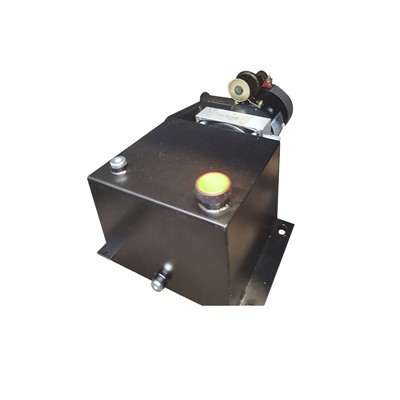
Hydraulic Pump
The hydraulic pump is the heart of any compact hydraulic system. Its primary function is to convert mechanical energy into hydraulic energy by creating a flow of pressurized fluid. There are several types of pumps commonly used in compact hydraulic applications, such as gear pumps, vane pumps, and piston pumps.
Gear pumps are simple, reliable, and cost – effective. They consist of two meshing gears that rotate within a housing. As the gears rotate, they create a vacuum at the inlet, drawing in hydraulic fluid. The fluid is then trapped between the gear teeth and the housing and transported to the outlet, where it is discharged at high pressure. Gear pumps are well – suited for low – to medium – pressure applications and are often used in mobile equipment, such as forklifts and small construction machinery.
Vane pumps, on the other hand, use vanes that slide in and out of slots in a rotor to create a pumping action. The vanes are forced against the inner wall of the cam ring by centrifugal force or hydraulic pressure, creating chambers that expand and contract as the rotor rotates. This expansion and contraction draw in and expel hydraulic fluid, generating pressure. Vane pumps are known for their smooth operation, low noise levels, and good efficiency at medium – pressure ranges, making them popular in industrial and automotive applications.
Piston pumps are the most efficient and versatile type of hydraulic pump. They use pistons that reciprocate within cylinders to create a pumping action. The pistons are driven by a swash plate or a bent – axis mechanism, which converts rotational motion into linear motion. Piston pumps can generate high pressures and are capable of delivering large flow rates, making them suitable for high – power applications, such as heavy – duty construction equipment and aerospace systems.
Hydraulic Cylinder
Hydraulic cylinders are another essential component of compact hydraulic systems. They convert hydraulic energy back into mechanical energy by generating linear motion. A hydraulic cylinder consists of a cylinder barrel, a piston, a piston rod, and end caps. The piston divides the cylinder into two chambers: the rod side and the cap side.
When hydraulic fluid is pumped into the cap side of the cylinder, the pressure forces the piston to move towards the rod side, extending the piston rod. Conversely, when fluid is pumped into the rod side, the piston moves towards the cap side, retracting the piston rod. The force generated by the hydraulic cylinder is proportional to the pressure of the hydraulic fluid and the area of the piston.
Compact hydraulic cylinders are designed to be lightweight, space – saving, and highly efficient. They are commonly used in applications where precise linear motion is required, such as robotics, material handling equipment, and agricultural machinery.
Hydraulic Valves
Hydraulic valves play a crucial role in controlling the flow, pressure, and direction of hydraulic fluid in a compact hydraulic system. There are several types of hydraulic valves, including directional control valves, pressure control valves, and flow control valves.
Directional control valves are used to control the direction of fluid flow in the hydraulic system. They can be manually, electrically, or hydraulically operated and are available in various configurations, such as spool valves and poppet valves. Directional control valves are essential for controlling the movement of hydraulic cylinders and motors, allowing the operator to start, stop, and reverse the motion of the equipment.
Pressure control valves are used to regulate the pressure of the hydraulic fluid in the system. They prevent the system from over – pressurizing, which can cause damage to the components. Common types of pressure control valves include relief valves, pressure – reducing valves, and sequence valves. Relief valves are the most widely used pressure control valves. They open when the system pressure exceeds a pre – set limit, allowing excess fluid to flow back to the reservoir, thus protecting the system from damage.
Flow control valves are used to regulate the flow rate of hydraulic fluid in the system. They can be used to control the speed of hydraulic cylinders and motors, ensuring smooth and precise operation. Flow control valves can be either fixed or adjustable, depending on the application requirements.
Hydraulic Reservoir
The hydraulic reservoir is a container that stores the hydraulic fluid in the system. It serves several important functions, including providing a source of fluid for the pump, dissipating heat, and allowing contaminants to settle out of the fluid.
The reservoir should be large enough to accommodate the fluid requirements of the system and provide sufficient surface area for heat dissipation. It should also be equipped with a breather to allow air to enter and exit the reservoir as the fluid level changes. Additionally, the reservoir may include a filter to remove contaminants from the fluid before it enters the pump.
Hydraulic Filters
Hydraulic filters are essential for maintaining the cleanliness of the hydraulic fluid in the system. Contaminants such as dirt, metal particles, and water can cause damage to the components of the hydraulic system, reducing its efficiency and reliability.
There are several types of hydraulic filters, including suction filters, pressure filters, and return filters. Suction filters are located at the inlet of the pump and are used to prevent large particles from entering the pump. Pressure filters are located in the high – pressure line and are used to remove contaminants from the fluid after it has been pressurized by the pump. Return filters are located in the return line and are used to remove contaminants from the fluid before it returns to the reservoir.
Hydraulic Hoses and Fittings
Hydraulic hoses and fittings are used to connect the various components of the compact hydraulic system. They must be able to withstand the high pressures and temperatures of the hydraulic fluid and provide a leak – free connection.
Hydraulic hoses are made of synthetic rubber reinforced with layers of braided or spiral – wound wire. They are available in various sizes and pressure ratings to suit different applications. Fittings are used to connect the hoses to the components of the system and can be either permanent or reusable.
Accumulators
Accumulators are energy storage devices that store hydraulic energy in the form of compressed gas. They can be used to supplement the flow of the pump during peak demand periods, absorb shock and vibration, and maintain system pressure in the event of a power failure.
There are several types of accumulators, including bladder accumulators, piston accumulators, and diaphragm accumulators. Bladder accumulators are the most common type and consist of a bladder filled with compressed gas (usually nitrogen) and a chamber filled with hydraulic fluid. When the pressure of the hydraulic fluid increases, the bladder compresses, storing energy. When the pressure decreases, the bladder expands, releasing the stored energy.
Working Together
All these key components of compact hydraulics work in harmony to deliver efficient and reliable performance. The pump generates the hydraulic power, the cylinders convert it into mechanical motion, the valves control the flow and direction of the fluid, the reservoir stores and cools the fluid, the filters keep the fluid clean, the hoses and fittings connect the components, and the accumulators provide additional energy storage and shock absorption.

In industries such as automotive manufacturing, aerospace, and mobile equipment, the compact size and high power density of these hydraulic systems are invaluable. They allow for the design of more efficient and space – saving machinery, which in turn can lead to cost savings and improved productivity.
Contact for Procurement
Tie Rod Cylinder If you’re in the market for high – quality compact hydraulic components, I invite you to reach out to us. As a trusted supplier, we have a wide range of products that meet the diverse needs of different industries. Whether you need a specific hydraulic pump, cylinder, or a complete system, we can provide you with the solutions you require. Our team of experts is ready to assist you in finding the right components for your application, ensuring optimal performance and long – term reliability. To start the conversation about procurement, simply contact our sales department. We look forward to working with you to enhance your machinery with the best – in – class compact hydraulics.
References
- "Fluid Power Engineering" by Antonio del Pinto and Kelsey – Latcham.
- "Hydraulic Systems Manual" by Eaton Corporation.
- Technical publications from leading hydraulic component manufacturers such as Bosch Rexroth, Parker Hannifin, and Danfoss.
Wuhu Zhongye Fluid Equipment Co., Ltd.
We are one of the most experienced compact hydraulics manufacturers and suppliers in China, specialized in providing high quality customized products. Please feel free to wholesale bulk durable compact hydraulics in stock here from our factory. Contact us for quotation.
Address: No. 2, Hexing Road, Sanshan District, Wuhu City, Anhui Province
E-mail: zhongyehydro20@163.com
WebSite: https://www.zhongyehydro.com/
