Hey there! I’m working for a turning and milling machine tools supplier, and today I wanna chat about how to measure the cutting forces in turning and milling machine tools. It’s a pretty crucial aspect in the machining world, and I think it’ll be super useful for you guys who are into this field. Turning and Milling Machine Tools
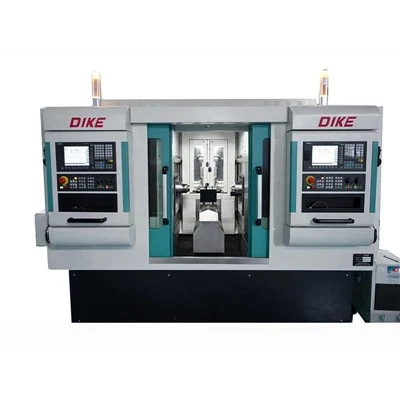
First off, let’s understand why measuring cutting forces is so important. When we’re machining parts using turning and milling machine tools, the cutting forces can have a big impact on the whole process. You see, excessive cutting forces can lead to issues like tool wear, poor surface finish of the workpiece, and even damage to the machine itself. By measuring these forces, we can optimize the machining parameters, like cutting speed, feed rate, and depth of cut. This not only helps in improving the quality of the finished products but also extends the lifespan of our tools and machines.
Now, let’s dive into the different methods of measuring cutting forces in turning operations. One of the commonly used methods is using a dynamometer. A dynamometer is basically a device that can measure force. In turning, we can use a two – component or three – component dynamometer. If we’re using a two – component dynamometer, it can measure the cutting force in two directions – the tangential force (which is the main force that does the cutting) and the radial force (which acts perpendicular to the cutting direction). For more accurate measurements, a three – component dynamometer can be used, which also measures the axial force.
To install a dynamometer in a turning machine, it’s usually placed between the tool holder and the tool post. When the cutting process starts, the dynamometer detects the forces applied on the tool and converts them into electrical signals. These signals are then sent to a data acquisition system, which displays and records the force values. This way, we can analyze the data and see how the cutting forces change during the operation.
Another way to measure cutting forces in turning is through the use of strain gauges. Strain gauges are small devices that change their electrical resistance when they’re deformed by a force. We can attach strain gauges to the tool holder or the cutting tool itself. As the cutting force acts on the tool, the strain gauges experience deformation, and this change in resistance is measured. The change in resistance is proportional to the applied force, so we can calculate the cutting force based on this measurement.
Now, let’s move on to milling operations and how we measure cutting forces there. Similar to turning, dynamometers are also widely used in milling. However, in milling, the cutting forces are more complex because the tool has multiple teeth, and each tooth engages and disengages with the workpiece during the operation. This results in fluctuating cutting forces.
In milling, we can use multi – component dynamometers, usually three – or six – component ones. A three – component dynamometer can measure the forces in the X, Y, and Z directions. A six – component dynamometer can not only measure the forces but also the moments (torques) in different directions. This gives us a more comprehensive understanding of the cutting process.
When installing a dynamometer in a milling machine, it’s typically placed between the milling cutter and the spindle. Just like in turning, the dynamometer measures the forces and sends the electrical signals to the data acquisition system for analysis.
We can also use indirect methods to estimate the cutting forces in milling. For example, by measuring the motor power consumption of the milling machine. The power consumed by the motor is related to the cutting forces. As the cutting forces increase, the motor has to work harder, and the power consumption goes up. So, by monitoring the motor power, we can get an idea of the cutting forces. However, this method is not as accurate as using a dynamometer, because there are other factors that can affect the motor power, such as friction in the machine components.
As a turning and milling machine tools supplier, we understand the importance of accurate cutting force measurement. That’s why we offer machines that are compatible with different cutting force measurement devices. We also have a team of experts who can help you choose the right measurement method and device for your specific machining needs.
If you’re looking to improve the efficiency and quality of your machining operations, measuring the cutting forces is a must. It can save you a lot of money in the long run by reducing tool wear and improving the surface finish of your workpieces.

If you’re interested in our turning and milling machine tools or need more information about cutting force measurement, don’t hesitate to get in touch with us. We’re always here to have a chat and see how we can help you take your machining to the next level.
CNC Lathes References:
- "Modern Machining Technology"
- "Cutting Mechanics in Machining Operations"
- "Handbook of Manufacturing Processes"
Wuxi DIKE CNC Technology Co., Ltd.
As one of the most professional turning and milling machine tools manufacturers and suppliers in China, we have world-leading production equipment and strong manufacturing capabilities. Please feel free to buy customized turning and milling machine tools at competitive price from our factory. Also, pricelist is available.
Address: No. 2, Xianshan Road, Qianqiao Street, Huishan District, Wuxi City, Jiangsu Province, China
E-mail: wxdk@wxdike.com
WebSite: https://www.dike-cnc.com/
